
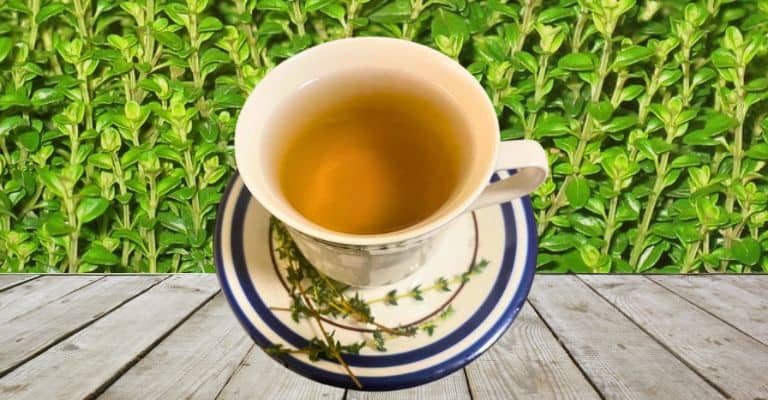
How it works: Bioactive compounds like those found in Thyme are responsible for Thyme tea benefits benefits. These compounds have anti-inflammatory, antimicrobial, and expectorant properties, allowing them to provide natural relief from several respiratory ailments.
How To Make Thyme Tea
Here’s the simple process for making thyme tea to get its benefits:
Use fresh or dried thyme (dried is fine and often more concentrated). For one cup, you’ll want about 1-2 teaspoons of dried thyme or 2-3 sprigs if using fresh.
For maximum benefits:
- Boil water and let it cool for about 1 minute
- Place the thyme in a cup or teapot
- Pour the hot water over the herbs
- Cover the cup (this is important to keep the beneficial volatile oils from escaping with the steam)
- Let it steep for 10-15 minutes (longer than many other herbal teas)
- Strain and drink.
For respiratory support, many herbalists recommend:
- Drinking 2-3 cups daily during respiratory issues
- Inhaling the steam while it steeps (carefully, to avoid burns)
- Adding a small amount of honey, which has its own respiratory benefits
- Drinking it warm rather than hot or cold
You can also combine thyme with other respiratory-supporting herbs like peppermint or ginger, though you might want to try it alone first to see how you respond to it.
Choose Premium Quality Thyme
Here are a seven tips to help you choose quality thyme for making tea:
- Leaves that are deep grayish-green (for common thyme)
- Strong, distinctive aroma when crushed
- Leaves that are intact rather than crumbled (for dried)
- No discoloration or mold
- If fresh, stems should be pliable, not woody
- Choose whole leaves over thyme powder
- Organic when possible, since thyme can concentrate compounds from soil
Research Insights
Modern research supports various health benefits of thymol1 a key compound in thyme. Studies reveal thyme extract helps reduce inflammation in the airways while helping to clear mucus. This dual action, both relaxing the airways and helping with mucus clearance, makes it particularly useful for respiratory issues.
Thyme Tea Respiratory Benefits
Powerful compounds like thymol, carvacrol, and flavonoids in thyme contribute to the tea’s benefits for respiratory issues. Let’s see how they work to help your body cope with respiratory ailments.
Thyme Tea For Cold
Thymol, a major compound in Thyme tea, has antimicrobial properties. Researchers found these antimicrobial effects2 makes the tea effective for treating colds. They also found that combining thyme extract with other herbs (particularly ivy), enhances its effectiveness.
Thyme Tea For Cough
The cough relieving benefit of thyme tea mainly comes from Carvacrol3 which plays a major role in respiratory health. Carvacrol acts as a natural expectorant, loosening and expelling mucus from the respiratory tract. Thyme tea helps reduce the coughing associated with respiratory infections.
Thyme Tea And Sore Throat
Research shows Thymol4 has significant antimicrobial activity against various bacteria and fungi. This confirms its effectiveness against respiratory tract infections like sore throats and sinus infections. So thyme tea a good option for relieving upper respiratory issues.
Thyme Tea For Chest Congestion
Allieviating chest congestion is another respiratory benefit of thyme tea. Clinical studies confirm Carvacrol in the tea acts as a natural tracheal muscle5 relaxant. Drinking thyme tea can help relieve asthma and bronchitis sympotoms for easier reathing.
Thyme Immune System Benefits
Thymol in thyme contributes to enhanced immune function by promoting the activity of immune cells. Thyme tea’s immune benefits strengthen the body’s defenses against infections to help your body recover faster from respiratory conditions.
Quick Takeways
Thyme tea, brewed from common thyme (Thymus vulgaris), has been as a natural remedy for a host of ailments. Research-based benefits of thyme tea include: relieving chest congestion, suppressing coughs, soothing sore throats and alleviating cold and bronchitis symptoms.
Buy Premium Quality Thyme
Thyme for making tea is available in local groecery stores and farmers markets. However, thyme is commercially available in different formulations as well. Here are a few forms along with the pros and cons to help you decide which is best for you:
| Formulation | Pros | Cons |
|---|---|---|
| Fresh/Dried Thyme | Fresh thyme often contains higher levels of essential oils and active compounds. | Fresh thyme spoils quickly and needs to be used within a few days or dried for preservation. |
| Thyme Leaf Capsules | Capsules are easy to take and can be consumed on the go without preparation. | Some capsules may contain fillers, binders, or additives that are not present in the fresh herb or extract. |
| Thyme Extract | Highly concentrated, so a small amount goes a long way. Contains concentrated essential oils and active compounds. | May contain alcohol if not specifically alcohol-free. Can be more expensive than other forms. |
More Thyme Benefits
While we’re focusing on its respiratory benefits, thyme tea offers several other potential health benefits. Let’s look at some of these in more detail:
- Digestive Benefits of Thyme: Feeling bloated? Thyme tea come to your rescue. It has carminative properties, meaning it can help reduce gas and bloating. Some studies suggest thyme may support bile production, which helps indigestion.
- Mood Enhancement: In our fast-paced world, a little mood boost can go a long way. The aroma of thyme has been linked to reduced stress and anxiety in some aromatherapy studies.
- Blood Pressure Regulation: Some preliminary studies indicate that Thyme might play a role in helping to regulate blood pressure. While it’s not a replacement for medication, adding thyme tea your routine may offer some cardiovascular benefits.
- Thyme Tea and Skin Health Thyme tea may be good for your skin! Antioxidants in thyme can help fight free radicals, which contribute to signs of aging. Some people use cooled thyme tea as a face toner or add it to bath water for a soothing soak.
Traditional Thyme Tea Uses
Thyme tea has been used by generations of people across different cultures to calm the nerves6, aid digestion, relieve pain, soothe coughs, alleviate cold symptoms: Here are some traditional uses across different cultures:
Did You Know?
Ancient Egyptian Healing: Thyme was used in ancient Egypt as part of the embalming process and in medicinal applications, especially for treating wounds and infections due to its antimicrobial properties.
Greek Respiratory Remedy: In ancient Greece, thyme tea was traditionally used to relieve respiratory issues such as bronchitis and congestion. The Greeks believed it could improve lung health and clear up chest infections.
Medieval Courage Booster: During the Middle Ages, thyme was associated with courage and vitality. Knights would drink thyme-infused beverages or carry sprigs of thyme into battle for strength and protection.
Mediterranean Digestive Aid: In Mediterranean folk medicine, thyme tea has long been used as a natural remedy for indigestion, bloating, and other digestive discomforts, believed to stimulate the digestive system and reduce gas.
European Cold and Flu Treatment: In traditional European herbal medicine, thyme tea was commonly consumed to soothe sore throats, fight colds, and reduce fever, largely due to its antimicrobial and anti-inflammatory effects.
These Thyme tea traditional uses reflect the broad historical use of thyme as a trusted herb for various ailments across cultures!
Thyme Tea Side Effects
While thyme tea is generally safe for most people, some may experience mild to moderate side effects like those listed below:
- Allergic reactions, including rash or itching.
- Digestive issues, such as nausea or upset stomach.
- Mild drowsiness in some individuals.
Who should avoid thyme tea: Certain individuals, such as pregnant or breastfeeding women, those with allergies to thyme, or individuals taking specific medications, should avoid this tea.
Now that you know the benefits and side effects of thyme, are you ready to add the herb to your wellness routine.
Disclaimer: This website is for informational purposes only. Nothing stated here should be viewed as medical advice. See our full medical disclaimer here.
Related Articles: You may also like Basil Tea for Cough and Cold
Conclusion
Thyme tea offers a natural, scientifically supported way to ease sore throat discomfort. The teas key active compound, thymol, along with other elements work together to reduce irritation, fight infection, and clear mucus. This makes it one of the best natural sore throat remedies.
However, the tea may not be perfect for everyone. Some individuals may experience allergic reaction to thyme, while it may interact with some medications. So, always consult a healthcare provider before introducing new herbal remedies into your routine.
Have ever had Thyme tea: We would love to hear your thoughts on this herbal tea. Please leave a comment below:
References
- Chauhan, Anil Kumar et al. “Potentiation of macrophage activity by thymol through augmenting phagocytosis.” International immunopharmacology vol. 18,2 (2014): 340-6. doi:10.1016/j.intimp.2013.11.025 ↩︎
- Borugă, O et al. “Thymus vulgaris essential oil: chemical composition and antimicrobial activity.” Journal of medicine and life vol. 7 Spec No. 3,Spec Iss 3 (2014): 56-60. ↩︎
- Sharifi-Rad, Mehdi et al. “Carvacrol and human health: A comprehensive review.” Phytotherapy research : PTR vol. 32,9 (2018): 1675-1687. doi:10.1002/ptr.6103 ↩︎
- Kowalczyk, Adam et al. “Thymol and Thyme Essential Oil-New Insights into Selected Therapeutic Applications.” Molecules (Basel, Switzerland) vol. 25,18 4125. 9 Sep. 2020, doi:10.3390/molecules25184125 ↩︎
- Reiter, M, and W Brandt. “Relaxant effects on tracheal and ileal smooth muscles of the guinea pig.” Arzneimittel-Forschung vol. 35,1A (1985): 408-14. ↩︎
- Fachini-Queiroz, Fernanda Carolina et al. “Effects of Thymol and Carvacrol, Constituents of Thymus vulgaris L. Essential Oil, on the Inflammatory Response.” Evidence-based complementary and alternative medicine : eCAM vol. 2012 (2012): 657026. doi:10.1155/2012/657026 ↩︎
Disclaimer: This website is for informational purposes only. Nothing stated here should be viewed as medical advice. See our full medical disclaimer here.
